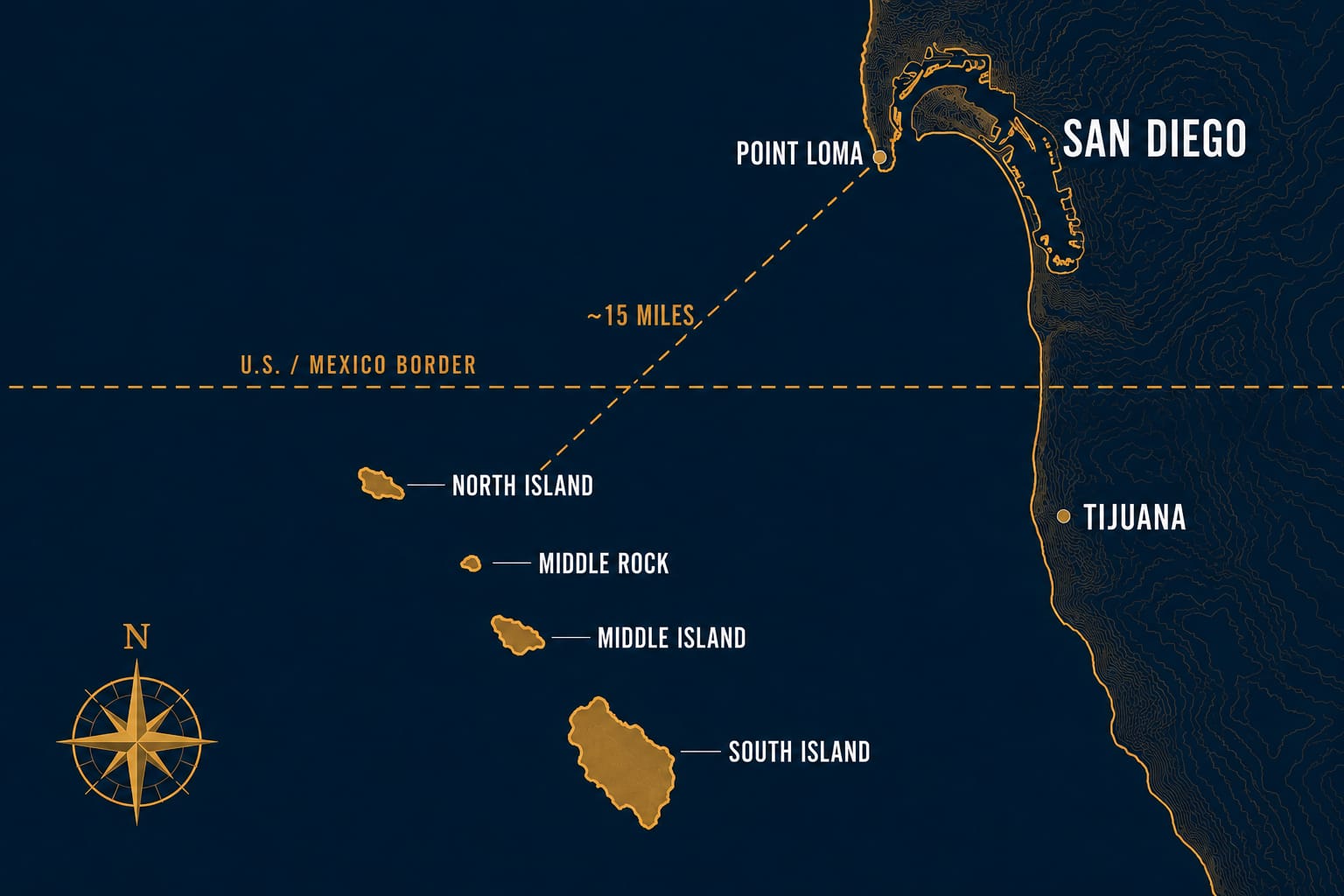
Fifteen miles south of Point Loma, four rocky islands rise out of the water in a line. They're close enough that on a clear day you can see them from the San Diego coastline, close enough that a three-quarter day boat can be fishing them before most people have finished their coffee.
They're also in a different country.
The Coronado Islands are Mexican territory, and that single fact shapes everything about fishing them — the paperwork in your pocket, the trips that go there, and the reason a fishery this productive sits within sight of one of the busiest sportfishing ports in America without being overrun. It also means you need a passport, which catches more first-timers than anything else about this fishery.
Here's what you need to know before you book.
The Four Islands
The Coronados — Islas Los Coronados — sit roughly 15 to 18 miles south of San Diego Bay and about 8 miles off the Baja coast near Tijuana. Four islands, running roughly northwest to southeast, plus assorted rocks and pinnacles.
North Island (Isla Coronado Norte) is the closest to San Diego and, for a lot of boats, the first stop. Kelp along its edges, rocky structure, and the shortest run from the landing. When a trip is short on time or the weather is marginal, North Island is where the day happens.
Middle Rock and Middle Island sit between the two ends. Middle Rock in particular is a well-known piece of structure — a steep, isolated rock that holds fish out of proportion to its size. The water around the middle of the chain drops off quickly, which is part of what makes it productive.
South Island (Isla Coronado Sur) is the largest of the four and the furthest run. It has the most varied structure — kelp, hard bottom, and deeper water on the outside — and it's where a lot of the better yellowtail fishing has historically happened. Getting there costs you run time, which is why trip length matters more at the Coronados than the short distance would suggest.
Anglers who fish the islands regularly talk about specific spots — kelp stringers, particular rockpiles, corners that fish better on certain tides. You don't need to know any of them. The captains do, and the fleet has been fishing this chain for generations.
The Paperwork: Read This Part Before You Book
This is what catches first-timers, and it's the single biggest practical difference between the Coronados and Catalina or the Channel Islands.
The Coronado Islands are in Mexican waters. A California fishing license does nothing for you south of the border.
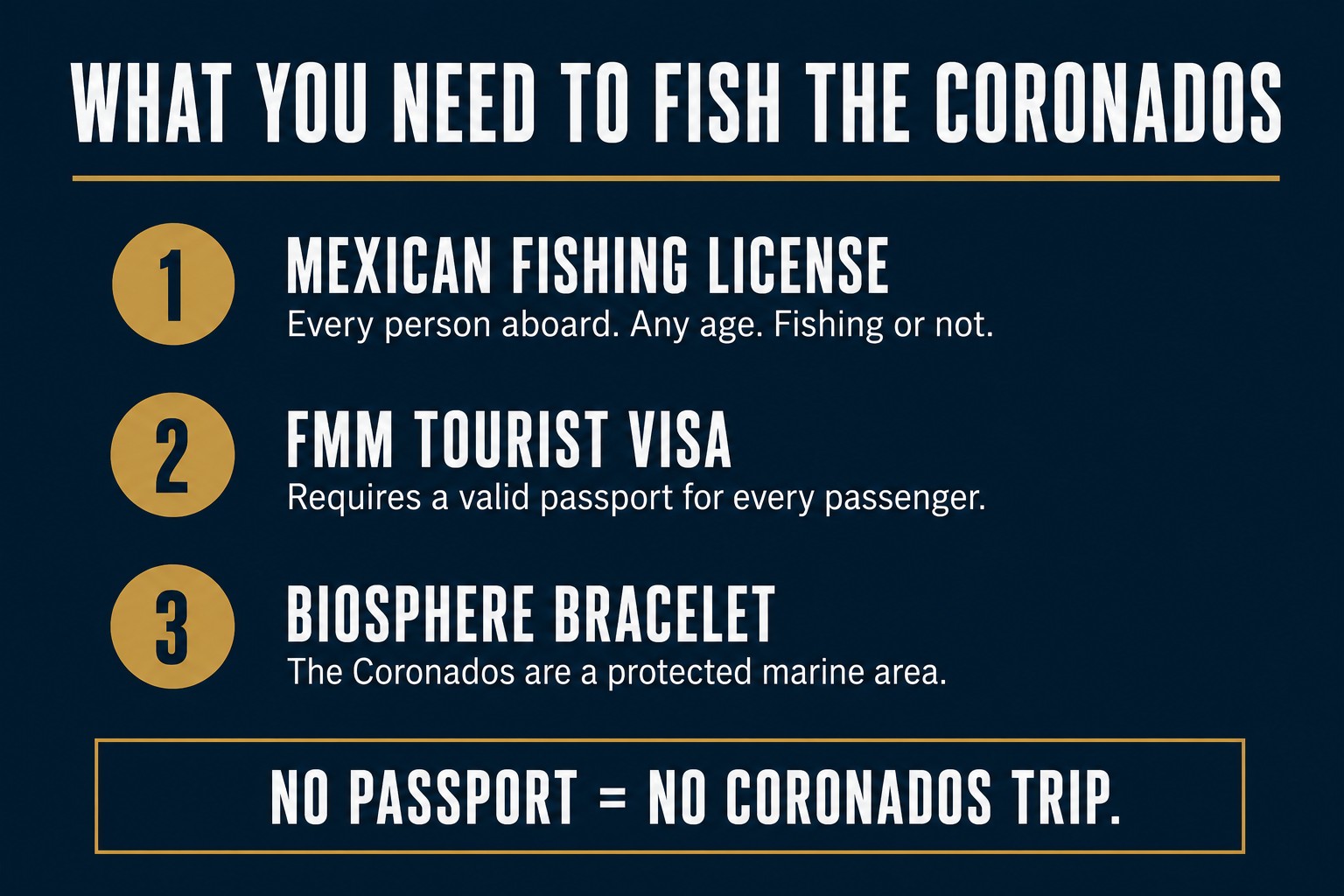
There are actually three separate pieces of paperwork, and the one that trips people up isn't the license.
1. A Mexican sportfishing license — for every person aboard. Not just the anglers. Everyone on the boat needs one regardless of age or whether they intend to fish at all. If you're bringing a kid who's just along for the ride, that kid needs a license.
2. An FMM tourist visa — and this is the one that requires a passport. Because the Coronados sit within 12 miles of Mexican land, trips there require a Mexican tourist visa, and the FMM requires a valid passport book or passport card for every passenger. Some operators need your passport information days in advance to process it.
This is the planning constraint nobody warns you about: if you don't have a passport, you cannot book a last-minute Coronados trip. A California driver's license won't do it. Birth certificates don't count. If a Coronados trip is anywhere on your list this season, sort your passport out now.
3. A biosphere bracelet. The Coronados are a protected biosphere area, and Mexico requires anglers fishing there to purchase a bracelet in addition to the fishing license. Landings sell these, and private boaters need to arrange their own.
Mexican regulations govern what you can keep, and they aren't identical to California's. The crew will tell you. Listen to them.
The good news: on an open-party trip out of a San Diego landing, the landing handles almost all of this for you. Some bundle the permits into the ticket price, some sell them at the counter, some need paperwork from you in advance. Costs vary by operator and change over time — ask when you book, not the morning of.
What you have to bring yourself is the passport. Everything else, they can sort out.
Which Landings Fish the Coronados
The Coronados are a San Diego fishery. The landings on San Diego Bay and Mission Bay are the ones with the geography, the permits, and the routine to fish there regularly.
Point Loma Sportfishing, Fisherman's Landing, and H&M Landing all sit on the same stretch of San Diego Bay near Shelter Island, and all three run Mexican-water trips as a core part of their schedule. These are the shortest runs to the islands in the entire SoCal fleet.
Seaforth Sportfishing in Mission Bay also runs Coronados trips. The run is slightly longer from Mission Bay than from San Diego Bay, but it's a well-established program.
Boats out of Oceanside, Dana Point, and further north generally don't run to the Coronados — the transit time stops making sense, and those fleets have their own local fisheries. If you want to fish the islands, you're leaving from San Diego.
Compare every Coronados trip across all the San Diego landings — dates, boats, pricing, and availability — at findyournextcatch.com/trips.
What's Biting When
The Coronados are a mixed fishery with a clear headliner.
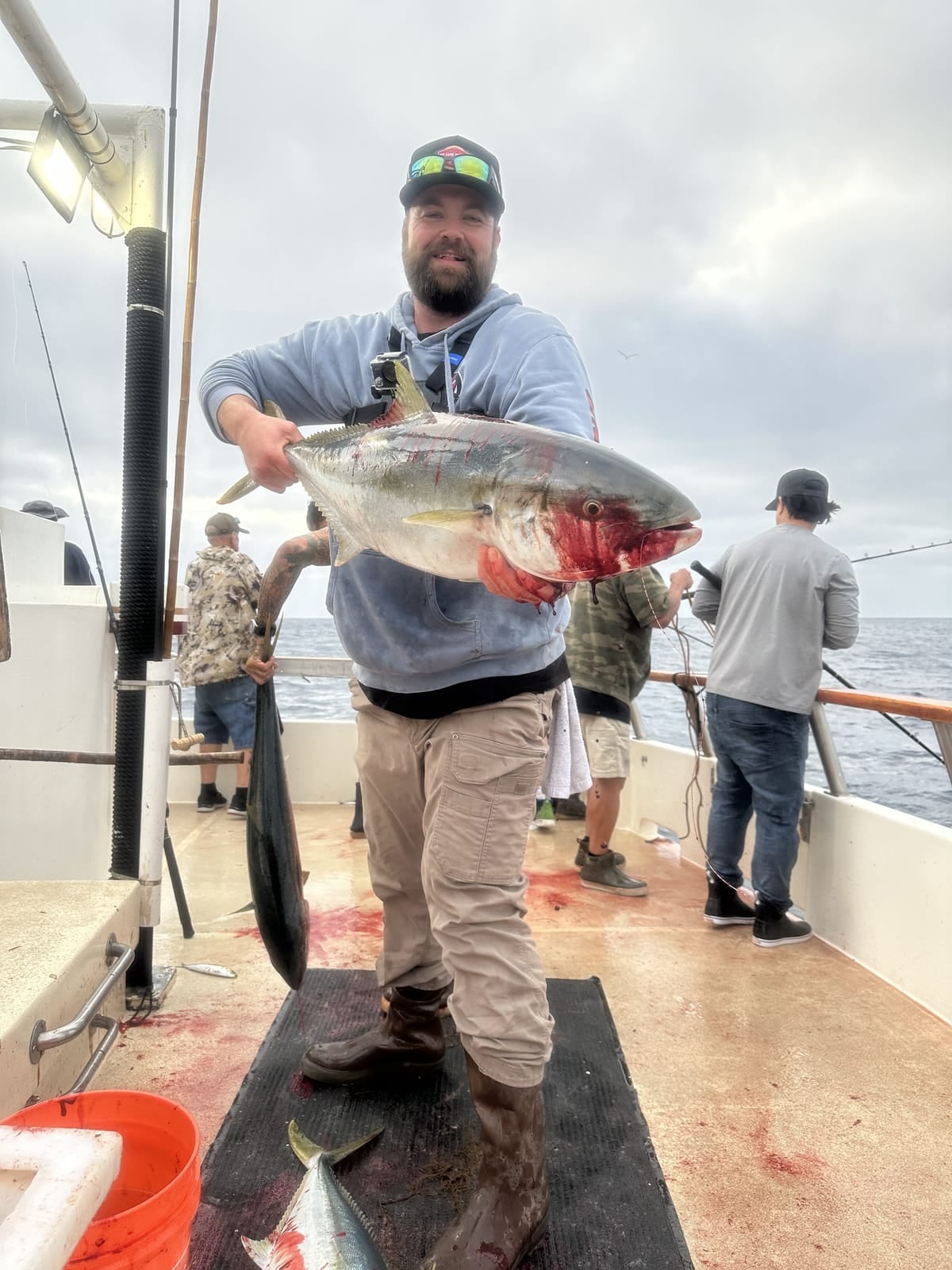
Yellowtail are the reason most people go. The Coronados have a long reputation as one of the most reliable yellowtail grounds accessible from San Diego on a short trip. The bite typically builds through spring, peaks in the warmer months, and tapers off through fall — though yellowtail are famously moody, and a good Coronados yellowtail day is a good day anywhere.
Calico bass are a year-round staple along the kelp and rocky edges, and the Coronados grow good ones. On days when the yellowtail don't cooperate, the calico fishing is often what saves the trip.
Rockfish — reds, various bottom grades — hold on the hard structure around the islands and provide consistent action, particularly on the deeper spots. Note that Mexican regulations govern here, not California's rockfish closures.
Barracuda and bonito move through seasonally and can turn a slow morning into chaos in about ninety seconds.
White seabass show at the islands, most often in spring. They're never a sure thing anywhere, but the Coronados are a legitimate white seabass address.
Bluefin and other offshore species aren't a Coronados fishery as such, but the islands sit on the way to water that produces them. Some longer trips fish the islands and the surrounding offshore banks in the same run, depending on where the fish are.
Live fish counts from every San Diego landing update nightly at findyournextcatch.com/intel — the fastest way to see whether the Coronados yellowtail are actually going right now.
Trip Types and What to Expect
Here's where the Coronados differ from what the distance suggests. The islands are close, but the trips that fish them well aren't the shortest ones.
Half day trips don't go. There isn't time to make the run, clear the paperwork realities of Mexican water, fish, and get back. Half days out of San Diego fish local kelp and bay structure.
Three-quarter day trips are the entry point. These are the classic Coronados trips — a morning departure, a run to the islands, a solid block of fishing, and back in the afternoon. If you're fishing the Coronados for the first time, this is almost certainly the trip you're booking.
Full day trips buy you more fishing time and more flexibility. The extra hours mean the captain can work the length of the chain rather than committing to one end of it, or slide out to nearby structure if the island bite is soft.
Overnight and 1.5-day trips reach the Coronados and keep going — down the Baja coast, out to offshore banks, or wherever the fish are. On these trips the islands are often one stop among several rather than the destination.
For most anglers, the honest answer is that a three-quarter or full day is the right Coronados trip. If you want to spend a night on the water, you're probably chasing something further south.
Not sure which trip length fits what you're after? We broke it down in detail in our half day vs. full day vs. overnight guide.
What Makes the Coronados Different
A few things set this fishery apart from the other SoCal island options.
The run is short, but the fishing is real. Catalina is a longer run from most SoCal ports. The Channel Islands are further still, and weather-exposed in ways that cancel trips. The Coronados give San Diego anglers island-quality fishing on a three-quarter day — which is a genuinely unusual combination.
Conditions are generally more forgiving than the Channel Islands. The Coronados sit in the lee of the Baja coast and don't take the same northwest wind exposure that Santa Rosa and San Miguel do. That doesn't mean it's always calm — it's still open ocean — but blown-off trips are less of a routine hazard than they are up north.
The islands are uninhabited and undeveloped. There's no harbor to duck into, no facilities, nothing ashore. What you bring is what you have.
Pressure is different. The license requirement and the international boundary mean the Coronados don't get the same volume of casual private-boat traffic that Catalina's front side sees. That's part of why the fishing holds up.
Practical Notes
Passport first, everything else second. Ask the landing what they need and when. Every San Diego landing handles Mexican-water paperwork routinely, but the arrangements vary and some need your passport details well before departure. This is not a trip you book the night before unless your documents are already in order.
Departures are early. San Diego's three-quarter day boats generally leave in the early morning. Plan your drive accordingly, and if you're coming from Orange County or LA, budget for the traffic that will absolutely exist.
Cell service gets strange. You may pick up Mexican carriers near the islands, which can mean roaming charges depending on your plan. Worth putting your phone in airplane mode unless you specifically want it on.
The crew handles the regulations. Mexican bag and size limits differ from California's. You don't need to memorize them — but you do need to actually listen when the deckhand tells you what's legal to keep.
Bring layers. It's open ocean, the morning run is cold, and the afternoon can be warm. Standard SoCal boat-day rules apply.
The Bottom Line
The Coronado Islands are the most accessible island fishery in Southern California for anyone leaving from San Diego. The paperwork is the only real barrier, and once your passport is sorted, the landing handles the rest.
If you've fished Catalina and want something with a different character, or if you're in San Diego and you've been running local kelp trips without ever crossing the line, the Coronados are the obvious next trip. Get the passport, book a three-quarter day, and go see what a fifteen-mile run buys you.
Ready to go? Find Your Next Catch lists every Coronados trip from every San Diego landing — with live fish counts, boat details, and pricing side by side. Filter by trip length or target species to find the one that fits.
Tight lines — and go find your next catch.