Think about the best fish you caught five years ago.
You probably have a photo somewhere. But what boat were you on? What did it actually weigh? What was the date? Most of us can get about halfway there before it goes soft — and the details that go first are the ones that made it a story instead of a picture.
That's not a memory problem. It's a storage problem. Your phone is very good at holding images and terrible at holding context. Social feeds are worse: they're designed to move on. Whatever you posted three seasons ago is functionally gone, scrolled past by you and everyone else, and it takes the date and the boat with it.
Catch Cards are our answer to that. Not another feed. A place where a fish worth remembering actually stays.
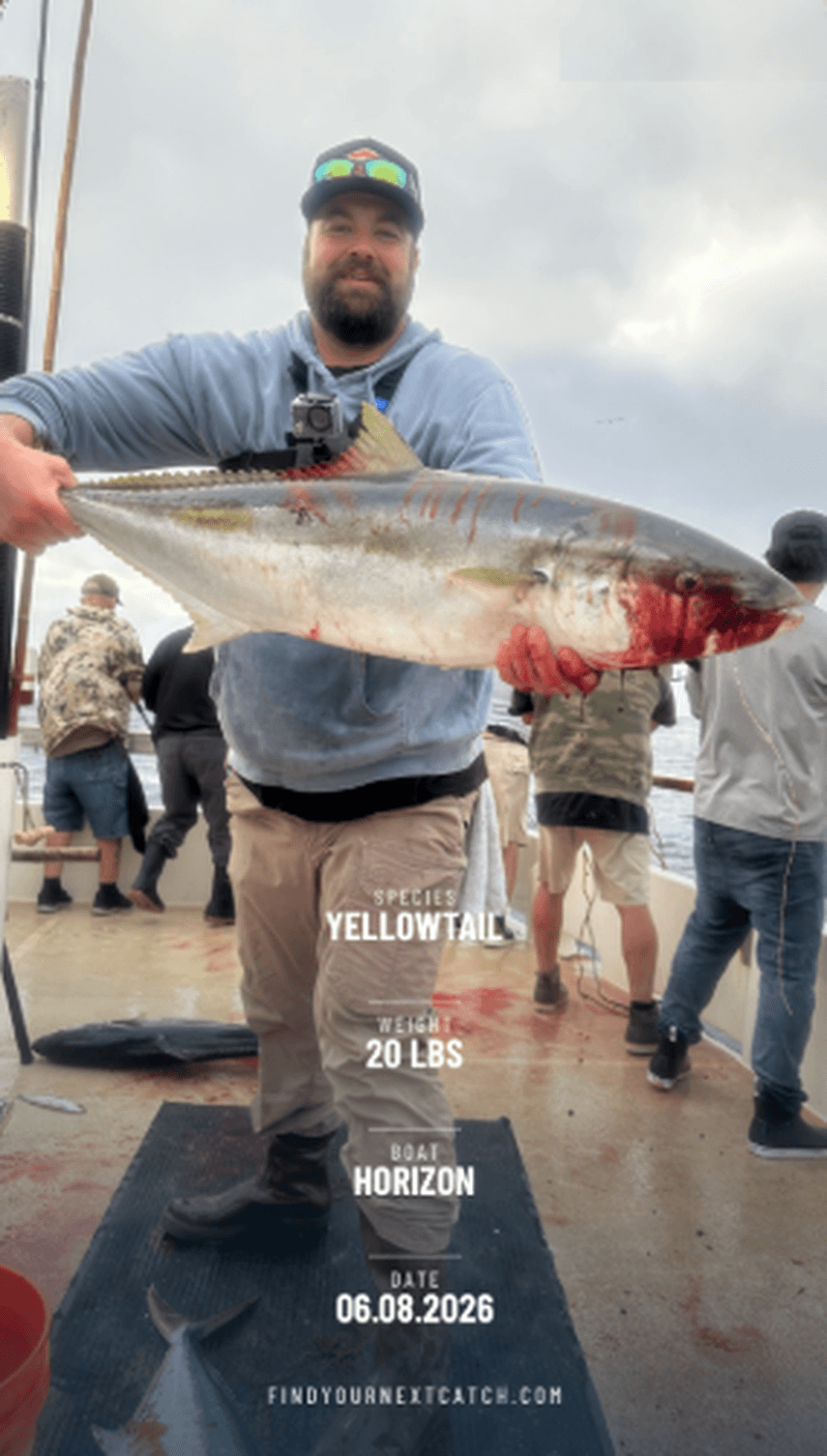 Yellowtail, 20 lbs, Horizon — June 8, 2026. Four fields, and the trip stays findable.
What you make
A Catch Card is a clean image of your catch — your photo, plus the four things that turn it into a record: species, weight, the vessel, and the date.
Four templates depending on what you want carrying it: Panel, Full Photo, Circle, and Data. Three color treatments — Navy, Brass, and Dawn. Two sizes, Post for a feed and Story for vertical.
You build it in the browser. Tap a field to edit it, tap the photo area to add your own, and what you see while you're building is exactly what you get. It takes about a minute.
You don't need an account to build one. Go make a card right now at findyournextcatch.com/catch-cards/new and see exactly what you get before anyone asks you for anything. Saving and sharing is where you'll need to sign in — but you'll have seen the finished card first.
What you keep
Here's the part that matters more than the card.
When you make a Catch Card with an account, it doesn't just produce an image — it writes a record. Species, weight, vessel, date, attached to the photo instead of floating loose around it. Over a season that becomes a log. Over a few years it becomes something you can't reconstruct any other way.
Your account keeps track of trips logged, fish caught, landings visited, and what your top catch has been. Add a journal entry to a trip and you get the rest of it — how the water was, whether you'd book that boat again, what actually happened out there. Ten trips in, you can look back and see which landings have treated you well and which boats you keep returning to.
 Your account keeps the running totals — no spreadsheet required.
That's the thing a camera roll can't do and a social feed won't. A photo shows you a fish. A record tells you where you were, who took you there, and when — years later, when you've forgotten and it matters.
We built FYNC because the information anglers need was scattered across twenty websites. This is the same idea pointed at your own fishing instead of the fleet's.
Why sign in
Building a card is free and open to anyone. Signing in is what lets you keep it and send it.
An account gets you:
- Saving and sharing. A card you build without an account disappears when you close the tab. With one, it's yours — shareable by link, editable later.
- A fishing journal that remembers the boat, the landing, and the date so you don't have to.
- A watchlist for trips you're eyeing.
- The weekly intel email — what's biting, which boats are hot, delivered Mondays.
It's free. It takes a minute. Create your account and your next card is the first entry in a log you'll still have in ten years.
One note on sharing, because we'd rather say it than bury it: sharing a card generates a public link, and anyone with that link can see the card, your photo, and your display name. That's how sharing works — but you should know it going in.
What it isn't
It isn't a leaderboard. No ranking, no competition, no pressure to post a bigger fish than the last guy.
It isn't a feed you have to feed. Make one card a season if that's your pace. Make one for the fish you'd actually tell somebody about at the dock and skip the rest.
And it isn't a replacement for being out there. The card is a frame. The fish is yours.
Start with one
Pick the best fish you caught this summer. Make a card for it. See what it looks like when the boat and the date are sitting right there next to the photo instead of lost in a camera roll.
If you make one you like, tag us. We'd rather look at your fish than talk about our own feature.
Already keeping a log? FYNC Pro adds the Species Hotspot Map — live catch rates by species and landing across all 21 sources — plus unlimited journal entries and real-time trip alerts. $7.99/month or $59.99/year.
Tight lines — and go find your next catch.