If you've been watching the fish counts this week, you already know something unusual is happening off the Southern California coast. Bluefin tuna — the fish most SoCal anglers spend all summer chasing — are showing up in numbers right now, in mid-April. Weeks ahead of when anyone expected them.
This isn't a rumor or a one-boat fluke. It's showing up in the data across multiple vessels, multiple landings, and multiple days. And if history is any guide, the anglers who get out early are the ones who tell the best stories.
Here's everything you need to know about the 2026 SoCal bluefin tuna season — what's happening now, how to find the right trip, and what to expect if you've never chased bluefin before.
What's Happening Right Now
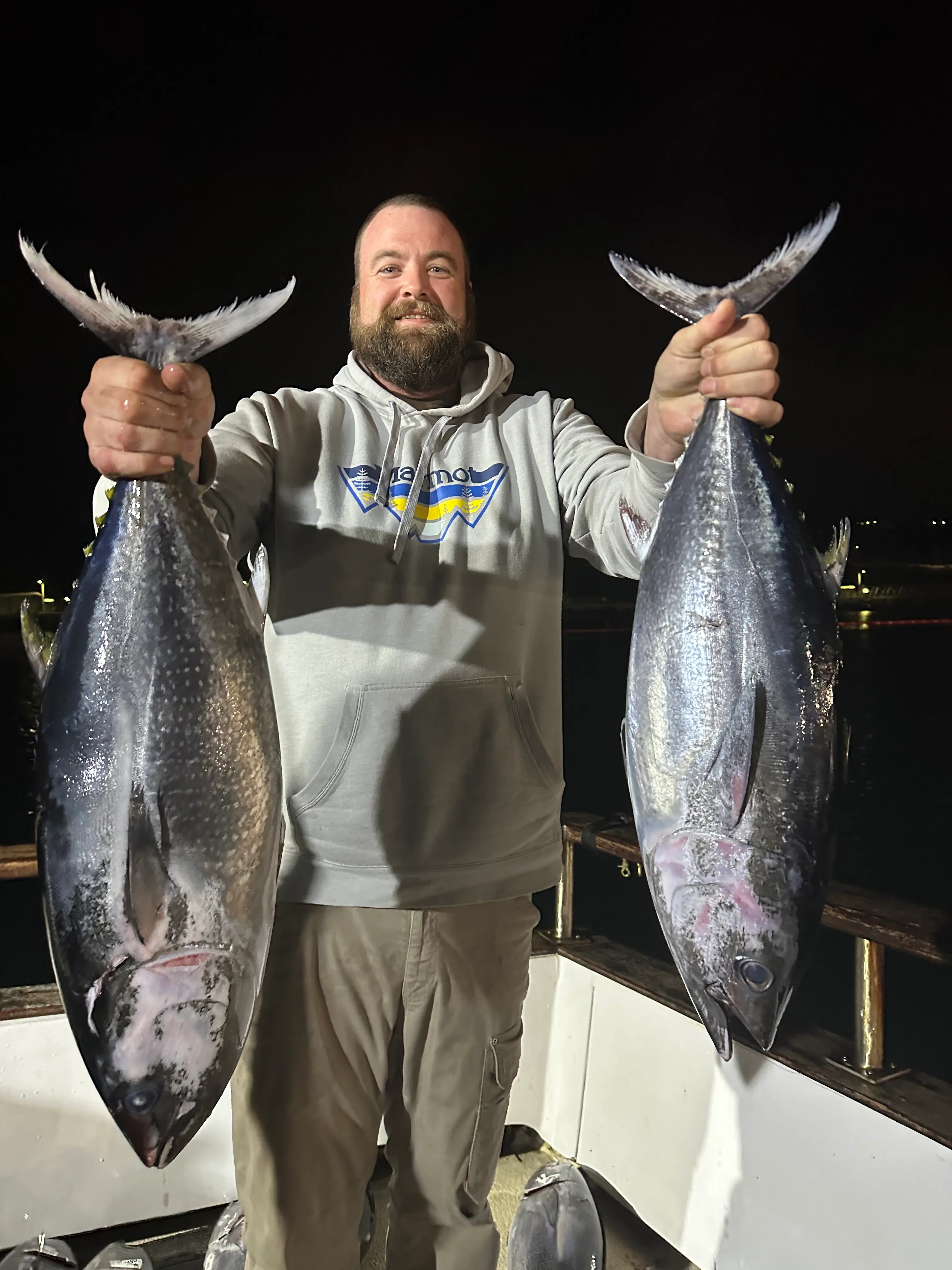
The numbers coming in this week are remarkable for April. According to live fish counts tracked across 18 SoCal landings, 586 bluefin tuna have been landed in the last 7 days across 7 trip reports. That's a fish-per-angler rate of 0.62 — which doesn't sound dramatic until you consider that these are bluefin tuna, not rockfish.
The hot boats this week tell the story:
- Polaris Supreme out of Seaforth Landing — 404 bluefin tuna, weighted score of 80.2
- New Lo-An out of Point Loma — 243 bluefin, weighted score of 104.6
- Tribute out of Seaforth Landing — 60 bluefin tuna in a single trip on April 19th, including bonito and dorado in the same outing
- Pacific Voyager out of Seaforth Landing — 64 bluefin tuna mixed with 160 yellowtail on back-to-back trips
Fisherman's Landing reported this week that bluefin are being caught within 1-day range on 25-30lb flyline setups with fluorocarbon and #4 to 1/0 hooks. The Old Glory out of H&M Landing came in with limits of bluefin over the weekend.
This is mid-April. This does not normally happen.
Why Is the Bite Early?
Nobody has a definitive answer yet, but experienced SoCal captains point to a few factors:
Water temperature. Warmer-than-usual sea surface temps off the Southern California Bight are drawing baitfish — and wherever the bait goes, the tuna follow. Bluefin are opportunistic predators and they'll push into shallower, closer range when conditions are right.
El Niño effects. Extended warm water patterns from recent years have shifted typical migration timing for several pelagic species. What used to be a June or July arrival is increasingly happening in April and May.
Better detection. More boats are running offshore earlier in the season because anglers have learned that the fish can show up any time. That creates more reports, which creates more awareness, which brings more boats — and confirms what the data is showing.
Whatever the reason, the fish are here. The question is whether you're going to be on the water when they are.
What You Need to Know Before You Book
Choosing the Right Trip Type
Bluefin tuna fishing in SoCal is not a half-day endeavor. Here's a breakdown of your options:
1.5-Day Trips (Overnight) The minimum commitment for serious bluefin fishing. You depart in the evening, fish through the night and following day, and return the next afternoon. Price range: $350–$600 per person. This is the most popular option for anglers targeting bluefin on a budget.
2–3 Day Trips More time means more water covered and more opportunities. Ideal if you want to maximize your chances or target larger fish. Price range: $600–$1,200 per person.
Long Range (4+ Days) For the most serious bluefin anglers. Vessels like the Royal Star, Excel, and Polaris Supreme run extended trips deep into Mexican waters where trophy-sized bluefin — fish over 100 pounds — are a realistic possibility. Price range: $1,500–$4,000+.
For most anglers making their first bluefin trip, a 1.5-day is the right starting point.
What Gear Do You Need?
Most sportfishing vessels out of SoCal do not supply rods, reels, or tackle — you're expected to bring your own or purchase what you need at the landing's tackle shop before you depart. Most landings have well-stocked tackle shops right on the dock, open early on departure mornings.
Rods and reels can be rented at most landings if you don't own your own gear or don't want to travel with it. Rental setups are typically basic but functional — perfectly fine for a first trip. A handful of long-range boats do provide a limited number of rods and reels available to use free of charge, but availability isn't guaranteed so don't count on it.
Bring multiple setups if you can. Bluefin tuna fishing is not a one-rod game. The technique that works changes depending on where the school is holding in the water column, the time of day, and how the fish are responding. Having two or three rods rigged with different setups ready to go can be the difference between getting bit and watching everyone else get bit.
The standard line setup most experienced SoCal anglers run is braided line backing, topped with monofilament, finished with a fluorocarbon leader. The braid gives you strength and sensitivity, the mono acts as a shock absorber, and the fluorocarbon leader is nearly invisible in clear water — critical for line-shy bluefin.
Techniques vary by situation:
- Flyline — live bait with no weight, drifted naturally in the current. The most common and deadly technique when fish are feeding on or near the surface. Use lighter fluorocarbon (20–25lb) and small hooks (#4 to 1/0) to match the bait
- Sinker rig — when fish are holding deeper or need to be presented below the thermocline. Add a sliding sinker above your swivel to get the bait down quickly
- Slow pitch jigging — highly effective when fish are marked on the sonar at specific depths but won't come up for bait. Requires a dedicated slow pitch rod and jig matched to the depth
- Knife jigs — fast, aggressive presentation for active fish. Works especially well when bluefin are schooled up and competing. Cast and retrieve or vertical jig depending on conditions
- Night fishing — on overnight and 1.5-day trips, the bite often fires after dark. Glow-tipped jigs and heavier sinker rigs tend to outperform flyline presentations at night
The crew will have a read on what's working when you're on the water — watch what the successful anglers around you are doing and don't be afraid to ask the deckhands for advice. That's what they're there for.
Terminal tackle — hooks, leaders, jigs, sinkers — should be purchased at the landing tackle shop before you board. Stock up on the dock before you leave because once you're offshore your options are limited. Occasionally a deckhand might have an extra hook or jig they can spare if you're in a pinch, but don't count on it — it's more of a courtesy than a service.
Live bait is provided on most open party trips and is included in your ticket price.
What Should You Expect?
Bluefin tuna fishing is as exciting as saltwater fishing gets — and as humbling. Here's an honest picture:
The highs: When a school of bluefin comes up and starts crashing bait on the surface, the adrenaline is unlike anything else in fishing. Watching 50–100 pound fish pinwheeling on a light flyline setup is something you don't forget.
The reality: Bluefin are not guaranteed. Some trips come back with limits, others come back with stories about the ones that got away. Captains work hard to put you on fish but the ocean doesn't follow a script.
The physical side: These fish fight hard. A 40–60 pound bluefin on 25lb fluorocarbon can take 30–45 minutes to land. Your arms will know about it the next day. That's a feature, not a bug.
Seasickness: Offshore trips involve real ocean swells. If you're prone to motion sickness, take medication the night before and again the morning of the trip. Bonine and Dramamine are the standard recommendations — ask your doctor what works best for you.
Where Are the Fish Right Now?
Based on current reports and live fish count data from FYNC, the activity is concentrating around:
San Diego — The Coronado Islands and beyond The Coronados have been consistently producing bluefin this week. Vessels out of Seaforth Landing, Point Loma, and Fisherman's Landing are all reporting action. The fish are within 1-day range, meaning shorter boat rides and less time in transit.
Offshore — The Tanner and Cortez Banks For bigger fish and more consistent counts, multi-day boats are pushing further offshore to the Tanner and Cortez Banks. This is where the larger bluefin — fish in the 60–100lb class — tend to congregate. These trips require a longer time commitment but the payoff can be significant.
How to Find and Book a Bluefin Trip
This is exactly what Find Your Next Catch was built for. Instead of calling around to every landing or checking multiple websites, you can search, compare, and find available bluefin-targeted trips across 21 SoCal landings in one place.
Here's how to use FYNC to find your trip:
- Go to findyournextcatch.com/trips
- Filter by Target Species: Bluefin Tuna
- Filter by your preferred departure date and trip duration
- Check the Hot Boats rankings to see which vessels have been producing
- Compare trips side by side to find the best value
You can also check the Intel page at findyournextcatch.com/intel for live fish counts, species breakdowns, and the Hot Boats weighted rankings updated daily.
A Few Tips From the Dock
After years of fishing SoCal charter boats, here's what actually makes the difference between a great trip and a forgettable one:
Book sooner rather than later. When the bite is hot and word gets out, trips fill up fast. Several boats this week are showing as "Almost Full" with just 1–2 spots remaining.
Ask the landing which boats have been producing. The ticket desk knows exactly which captains have been on the fish. Don't be shy about asking.
Bring layers. Nights offshore are cold even in April. A good set of thermals and a waterproof layer will make a 1.5-day trip significantly more comfortable.
Eat before you get seasick, not after. A light meal before departure is better than an empty stomach — but don't overdo it.
Tip your crew. The deckhands work incredibly hard — rigging lines, gaffing fish, keeping bait fresh, cleaning your catch. 15-20% of your trip cost is standard and genuinely appreciated.
The Bottom Line
The 2026 SoCal bluefin tuna season is already delivering, and we're only in mid-April. Whether you've been chasing bluefin for years or you've always wanted to try your first offshore trip, right now is as good a time as any to get out there.
The data doesn't lie. The fish are here.
Check live fish counts and find available trips at findyournextcatch.com
Fish counts and Hot Boats rankings in this post are pulled from live data tracked by Find Your Next Catch across 21 SoCal reporting landings. Data updated daily.