The bluefin are here, and they're biting. The counts have surged over the past week — boats coming back from the longer San Diego runs with tuna stacked on the deck, and the bite only strengthens as the water warms through the summer.
Here's the thing about bluefin, though: they're the hardest-earned fish in Southern California. Pound for pound they're the strongest thing swimming out here, they've got eyesight like a hawk, and they can get downright finicky — the kind of fish that'll boil all around the boat and refuse everything you throw. That's exactly why landing one feels so good.
So let's talk about how to actually get one. This is the practical version — the techniques the SoCal fleet really uses, the tackle that matches the fish that are biting, and the game plan for anyone stepping onto their first offshore trip. You don't need to master all of it. But knowing what's going on around you is the difference between watching everyone else hook up and getting bit yourself.
First, know what you're looking at
Before technique, there's finding the fish — and on a good boat, the captain and crew do most of that work. But it helps to understand what they're seeing, because it tells you what's about to happen.
Out on the water, you'll hear a few words over and over:
- Foamers — fish crashing bait on the surface, usually with birds diving on top. Water looks like it's boiling. This is the exciting one: fish are up, feeding, and catchable if you can get a bait or lure into the chaos.
- Breezers — a school pushing water near the surface, sometimes with tails and fins showing. They're not crashing, just cruising. Trickier, but very much in play.
- Shiners — a school just under the surface, showing as a shimmer in the water rather than breaking it.
- Meter marks — fish showing on the boat's sonar, often holding deeper. When the captain calls out a depth ("they're at 200 feet"), that's your cue for the deep game.
Bluefin gather where warm water meets cooler water — temperature breaks that stack up bait. They follow sardines, anchovies, mackerel, and flying fish, and they hold around offshore structure and kelp paddies. The crew hunts all of this. Your job is to be ready when they find it.
The bread and butter: fly-lining live bait
If there's one technique to understand, it's this one, because it's how most SoCal bluefin get caught.
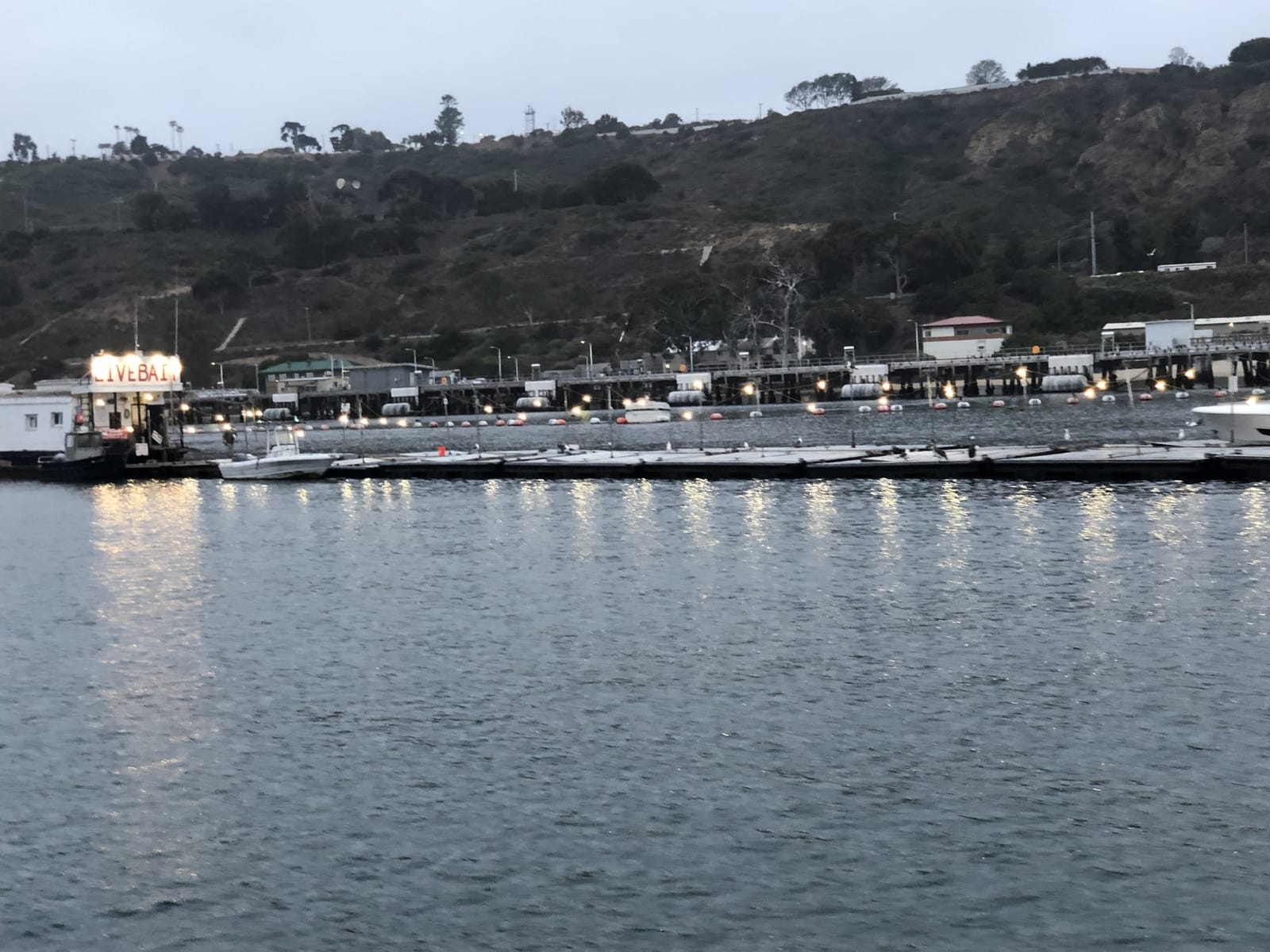
The boat stops on a school and the crew starts chumming — tossing live sardines or anchovies over the rail to bring the tuna up and hold them near the boat. You hook a live bait and "fly-line" it: no weight, no float, just a hook and leader letting the bait swim freely out into the chum line, looking like every other panicked sardine in the water.
A few things make or break it:
- Bait selection is everything. Pick the liveliest, greenest sardine in the tank — the one that fights you when you grab it. A fresh, energetic bait swims naturally into the school; a tired one just hangs there. Good anglers are picky about their bait for a reason.
- Hook it right. Through the nose or the collar, on a hook sized to the bait and the fish (roughly 2/0–4/0 circle hooks for schoolie-grade fish). Let it swim.
- Fluorocarbon leader, no exceptions. Bluefin can see straight monofilament and they'll shy off it. Fluoro is nearly invisible underwater, and it's often the difference between getting bit and getting ignored — especially when the fish are pressured.
- Free-spool with a light thumb. Let the bait swim out under light thumb pressure to avoid a backlash.
- When you get bit, don't swing. This is the big one for first-timers. Let the fish take it — a slow three-count while line peels off — then push the reel into gear and start winding. Tuna hook themselves against the drag. Swinging on them like a bass just pulls the bait out of their mouth.
When they go deep: the sinker rig and flat-fall jigs
Bluefin don't always come up. When they're holding deep on the meter, or when they're boiling on tiny bait and won't touch a fly-lined sardine, you go down to them.
The sinker rig is exactly what it sounds like — the same live-bait approach, but with a weight to get your bait down to the depth the fish are marking instead of leaving it on top.
Flat-fall (or knife) jigs are the other deep-water answer, and they're deadly. These are heavy metal jigs — the Shimano Flat-Fall is the one that started it — that flutter as they sink, mimicking a wounded squid or baitfish darting downward. The routine:
- Drop the jig to the depth the fish are marking (if they're at 200 feet, get down to and a little past them).
- Work it back up with a slow yo-yo motion — lift the rod, let it flutter down, lift again. A lot of bites come on the drop, when the flutter triggers the strike.
- Know your depth. Experienced jig anglers mark their braid with a Sharpie at intervals, or run multicolor braid that changes shade every so many feet, so they know exactly how deep the jig is. Getting it to the right zone is most of the battle.
- Keep your hooks sticky sharp. When a tuna eats a jig on the drop, a sharp hook does the work.
When they're up and crashing: surface iron and poppers
When the fish are foaming on the surface, casting to them is a blast — and sometimes the only thing that works.
Surface iron (long metal jigs), poppers, and stickbaits all get thrown at breaking fish. Cast beyond the school or to the edge of the boil — sometimes casting off the front of the boat puts your lure right in the path of a moving school. Then keep it moving; with iron, a steady-to-fast retrieve is usually the ticket, and most bites come while you're winding, so just keep reeling when you feel weight — the fish and the tension set the hook.
One safety note that matters: iron jigs flying off a rod are the number one cause of injuries on a crowded deck. Always look behind you before you cast and yell "going out".
The big-fish game: kite fishing
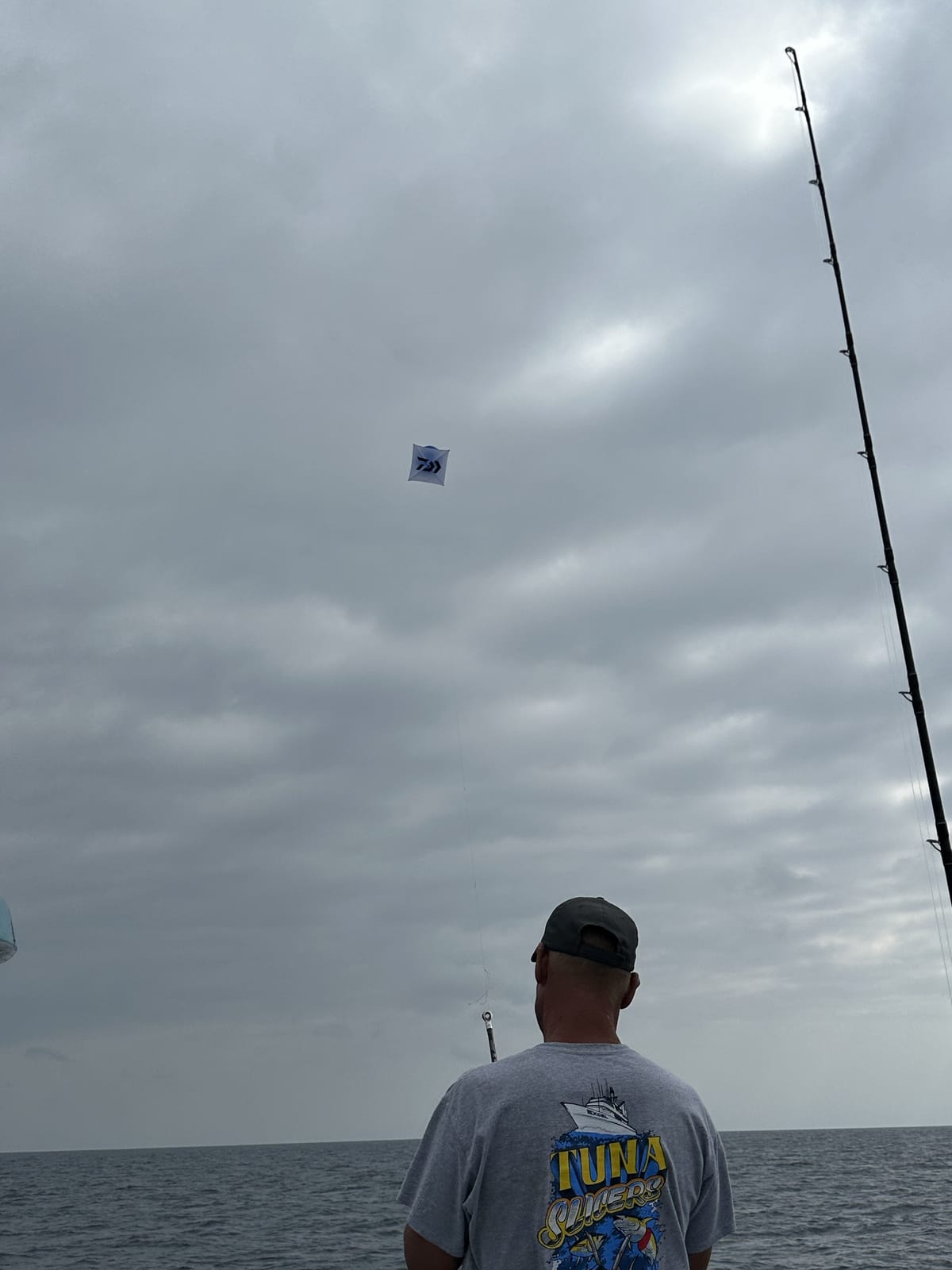
Kite fishing is the specialized technique, and it's how a lot of the bigger, warier bluefin get fooled. A kite flies a bait — often a flying fish or a live mackerel — so it skims and splashes on the surface with the line held up out of the water entirely. Because there's no line near the bait, it removes the one thing that spooks educated fish, and it creates a frantic surface commotion tuna can't resist.
It's usually a crew-run technique on boats set up for it, so you may not be rigging your own kite — but when the boat's flying one and a bluefin rockets up and explodes on that bait, it's some of the most exciting fishing there is. If you're on a trip targeting bigger fish, this is often the method putting the cows on the deck.
Tackle: what to bring
Bluefin come in a huge range of sizes in our waters — from 20-pound "schoolies" up to "cows" over 200 pounds — and the right gear depends on what's biting. The common advice is to bring a few setups covering light, medium, and heavy so you're ready for what shows up:
- School fish (20–50 lb): a medium-heavy rod, 40–50 lb braided line, a 30–40 lb fluorocarbon leader, and 2/0–4/0 ringed hooks. This is your standard live-bait outfit.
- Mid-grade (50–100 lb): a heavier rod, 65–80 lb braid, a 50–60 lb fluoro leader (a good 15–20 feet of it), 4/0–6/0 hooks, and a higher-capacity two-speed reel.
- Trophy fish (100 lb and up): stand-up heavy gear — 80–130 lb line class, 80–100 lb leader, big hooks, and a reel that holds 500+ yards, because a big bluefin will take a lot of it in one run.
If you're fishing an open-party boat and don't own a quiver of rods, don't sweat it — most landings have quality rental gear, and the crew will set you up with what matches the day. The fluorocarbon leader and sharp hooks matter more than owning the fanciest reel.
The open-party game plan (start here if it's your first time)
Here's the good news for anyone new: on an open-party boat, you don't have to figure out any of the above on your own. The crew does it every single day.
- Listen to the deckhands. They'll tell you what to throw, what depth to fish, which bait to pick, and when to drop. Follow their lead over anything you read — including this. They're reading the fish in real time.
- Don't swing on the bite. Worth repeating because it's the most common first-timer mistake. Let the fish load up, then wind. Tuna hook themselves.
- Don't horse the fish. Once you're hooked up, pulling as hard as you physically can just wears you out — and bluefin have more stamina than you do. Use short, steady pumps, let the rod and the boat do the work, and keep constant pressure. If your line suddenly goes slack, don't assume the fish is gone — bluefin often turn and swim at the boat, so reel fast to catch up.
- Keep the rod tip up and the drag right. A big fish is a marathon; pace yourself, and don't be shy about tagging in a buddy to take turns on a really big one.
Rules and prep
A few practical things before you go:
- License: you'll need a valid California sport fishing license. If your trip crosses into Mexican waters — like the Coronado Islands runs out of San Diego — you'll also need a Mexican fishing license, which the landing can usually help arrange. Bluefin tuna are 2 fish per angler per day.
- Trip length: bluefin are a longer-trip fish. Give yourself a 1.5-day trip or more so the boat has the run time to reach the grounds and stay on the fish. (Not sure which trip length fits you? Here's how to think about it.)
- Seasickness: offshore means open ocean. Even seasoned boaters get seasick on a rough day. Take motion-sickness medication the night before and the morning of — once you're green, it's too late.
The bottom line
Bluefin are the prize of Southern California sportfishing for a reason: they're strong, they're smart, and they make you earn it. But they're here right now in real numbers, the fleet is dialed in, and you don't need to be an expert to get one — you need the right trip, a little know-how, and a crew that puts you on them.
Check the live fish counts to see who's on the bluefin this week, find an open trip at Find Your Next Catch, and if you want the season-long picture, we broke it all down in our SoCal bluefin season guide.
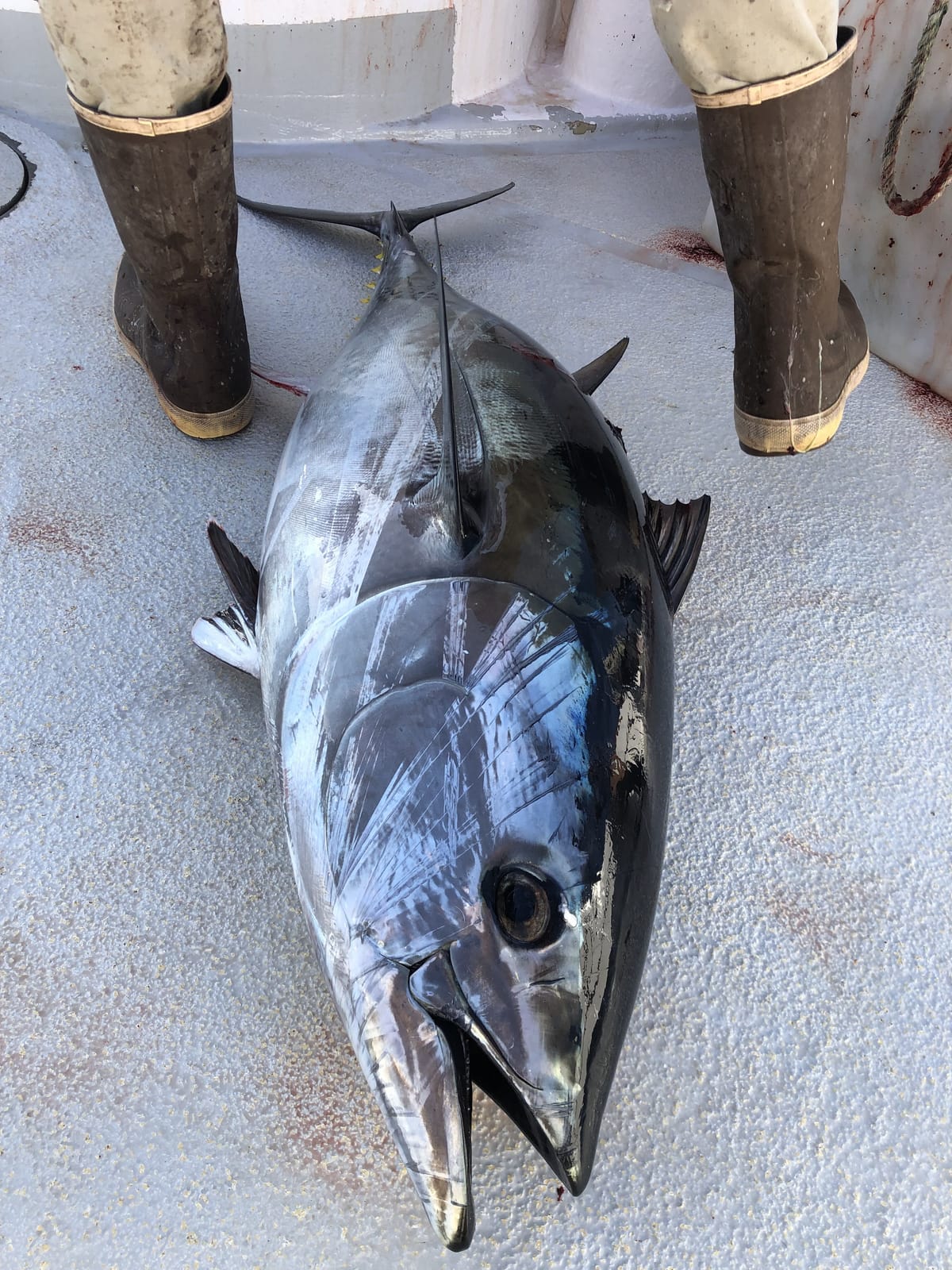
Now go get bit. Tight lines.