Ask a San Diego charter captain which fish built their business, and the answer isn't bluefin. It's yellowtail.
Hard-running, structure-hugging, and smart enough to make you earn every one, yellowtail are the fish most SoCal anglers cut their teeth on and never stop chasing. A 25-pounder on 40-pound tackle is the local gold standard — the fish that turns a slow half-day into a story. They run from five-pound "firecracker" schoolies on the local kelp to 40-pound "mossbacks" holding on deep structure, and they're catchable somewhere off Southern California nearly every month of the year.
They're also a fish you can learn to target deliberately, instead of hoping one eats. Most of what looks like luck on a good yellowtail day is actually a small number of techniques, applied at the right time. Here are the three that matter.
A note on gear before we start: you don't need a different rod for every technique. A good all-around SoCal yellowtail setup — braid backing with about 75 yards of mono top shot, no fluorocarbon needed — will handle surface iron, yo-yo, and bait for normal-grade fish. A 40-pound outfit covers most days; step up to 60 when the schools are jumbo. The single most useful thing you can do is bring more than one setup if you can, so you're ready for whatever the day turns into.
First: know what you're chasing
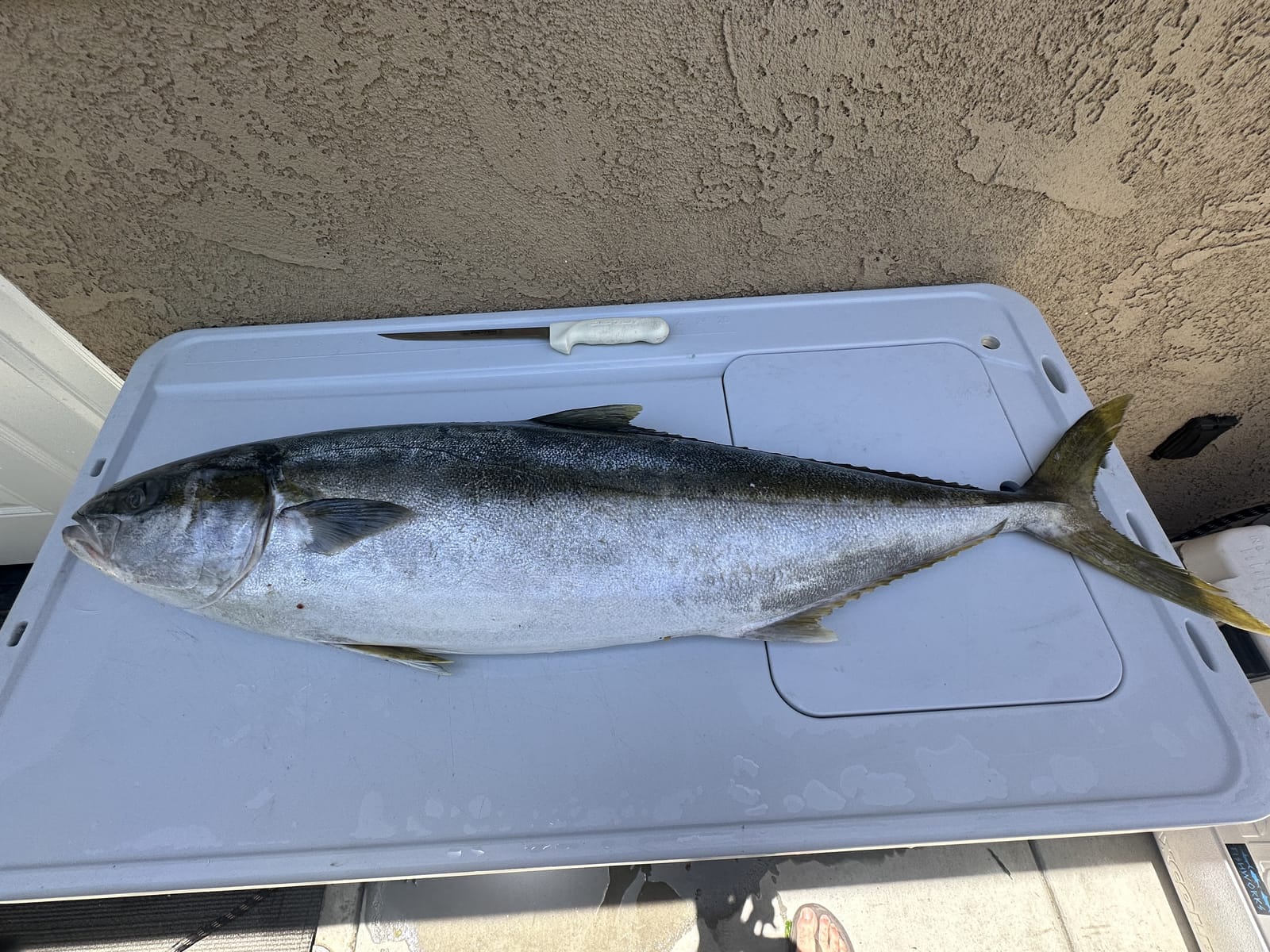
California yellowtail (Seriola dorsalis) are a jack, not a tuna — though you'd never guess it from how they fight. Pound for pound they pull harder than most tuna their size, and their signature move is to bolt straight for structure the instant they're hooked: a kelp stringer, a rockpile, the anchor line, anything that will part your leader. Half of yellowtail fishing is landing the ones you hook, not just getting bit.
They hold where bait and structure meet. That means kelp paddies drifting offshore, hard bottom and pinnacles, the edges of deep kelp beds, and current breaks that stack up bait. When you find one yellowtail, there are almost always more — they travel in schools, and a school that's feeding can turn a quiet drift into chaos in seconds.
The season has a rhythm worth knowing. Yellowtail are around most of the year, but spring brings the bigger fish as they move in to feed on the squid spawn, and the warmer months keep the bite going strong. The Coronado Islands hold them year-round, which is a big part of why they're the headline fish on that trip.
(For where the Coronados fit and what it takes to fish them, see our complete guide to the Coronado Islands.)
Technique 1: Surface iron
When yellowtail are boiling on the surface — busting bait where you can see them — surface iron is the most exciting way to catch them, and often the most effective.
The idea is simple: cast a heavy metal jig past the boiling fish, then retrieve it back through the zone so it swims like a fleeing baitfish. The strike is usually violent.
What matters most is the retrieve. The common mistake is burning the jig back at full speed. Yellowtail will track a surface iron for a good distance before committing, and too fast a retrieve pulls it away from the fish following it. A moderate-fast pace — fast enough to look like a panicked sardine, slow enough for a trailing fish to catch it — is the sweet spot. A wide, sweeping retrieve that lets the jig wobble side to side tends to draw more strikes than a straight fast wind.
Gear: a long jig stick is the tool here — the length is what lets you cast far and sweep the jig. Around 8 feet is a good working length; some anglers go longer, to 9 or even 10 feet, purely for extra casting distance, at the cost of it being more tiring over a full day. Run your braid-to-mono-topshot setup — no fluorocarbon needed — with a fast conventional reel. A 40-pound outfit is right for most fish. Proven jigs include the Tady 45 and the Salas 7X light; blue-and-white and "scrambled egg" are perennial SoCal colors that get bit almost any time yellowtail are on the surface.
Technique 2: Yo-yo iron
When the captain marks fish deep — down on the meter at 80, 100, 150 feet — and they won't come up to the surface, the yo-yo is your move.
This is vertical fishing. You drop a heavy iron straight down to the structure or the depth the fish are holding, then retrieve it back up at high speed. Drop, wind fast, repeat. The bite most often comes on the lift, as the jig races upward like fleeing bait — but yellowtail on structure will also eat it on the fall, so watch your line during the drop. A tick, or a sudden bit of slack, is a fish. Miss it and you'll never know it was there.
It's simple, and it's work — "wind like hell until your arm cramps" is a fair description. But when the fish are deep and won't come up, nothing else gets bit.
Gear: here's the good news — you don't need a whole new outfit. Most anglers fish the yo-yo with the same setup they're throwing surface iron with, just tied to a heavier jig. Because you're not casting, a long rod actually works against you; a shorter rod in the 7-to-8-foot range with a fast taper gives you better leverage to turn a fish out of the structure. What changes is the jig: heavier iron in the 6-ounce range, like a Tady 4/0 heavy or a Tady 9, gets down fast and holds the zone even in current. A 40-pound setup handles most yellowtail — they rarely top 40 pounds — and you'd only bump up to 60 if the schools are running big. A fast reel matters, so you can crank the jig up through the zone in a hurry.
Technique 3: Fly-lined live bait
When the fish are scattered, pressured, or just being difficult, live bait outfishes any jig — and often by a wide margin.
Fly-lining means fishing a live bait with little or no weight, letting it swim naturally. Nose-hook a lively sardine and let it swim into the zone — toward a kelp paddy, down into a boil, or along a structure edge. A healthy, well-chosen bait does the work; a lethargic one won't get bit, so it's worth taking the time to pick a strong swimmer from the tank.
Gear: this is the one spot where line choice really depends on the day. A 20-to-25-pound setup is the light end of the range — you'd fish that only when the fish aren't big and they're being genuinely finicky, since lighter line lets a bait swim more naturally and fools line-shy fish. But it's a gamble: a good yellowtail will bury you in the kelp on light line before you can turn it. When the fish are bigger or holding tight to structure, you want more — 40 pounds or heavier. This is exactly why bringing multiple setups matters: the right fly-line rig on a finicky small-fish day is the wrong one when a mossback eats. Nose-hook a lively bait on a live-bait hook sized to match it, and take the time to pick a strong swimmer from the tank — a healthy bait gets bit, a tired one doesn't.
Which one, when?
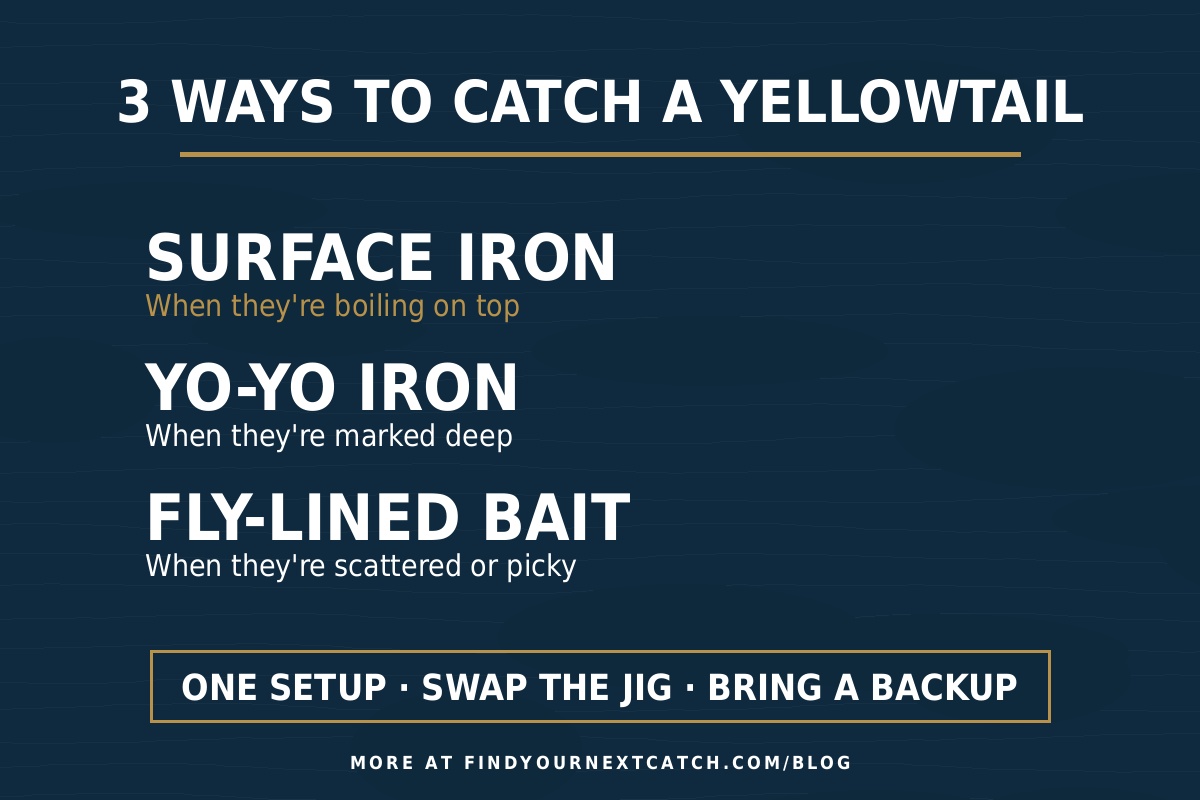
A rough field guide:
- Fish boiling on the surface → surface iron. You can see them; go get them.
- Fish marked deep, not coming up → yo-yo iron. Get down to their level.
- Fish scattered, pressured, or picky → fly-lined bait. Let a live one do the convincing.
On a real trip you'll often cycle through all three in a day as conditions change, and the crew will point you toward the right one. Which brings up the most important technique of all: listen to the deckhands. They've watched these fish get caught a thousand times more than you have. If the crew says throw the yo-yo, throw the yo-yo.
Know the limits — they change with the water
Yellowtail regulations depend on which side of the border you're fishing.
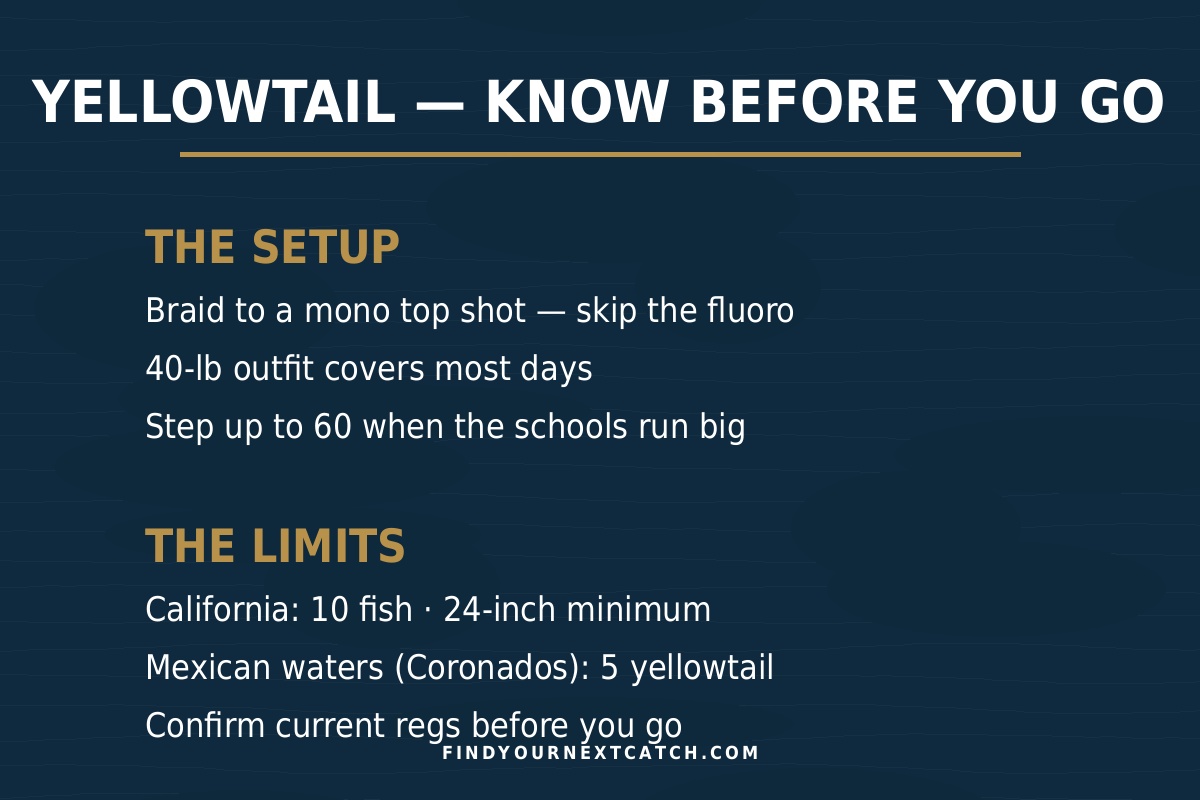
In California waters, the yellowtail fishery is open year-round. The daily bag and possession limit is ten fish, with a minimum size of 24 inches fork length — except that up to five fish under 24 inches may be kept. (Source: California Department of Fish and Wildlife. Always confirm current regulations before you fish, as limits can change.)
In Mexican waters — including the Coronado Islands — the rules are different. Mexican sportfishing regulations allow a maximum of five yellowtail per angler, as part of a total daily limit of ten fish across all species. If you're fishing the Coronados, your landing handles the Mexican licensing and can confirm the current limits — but don't assume the California numbers apply once you cross the line.
The bottom line
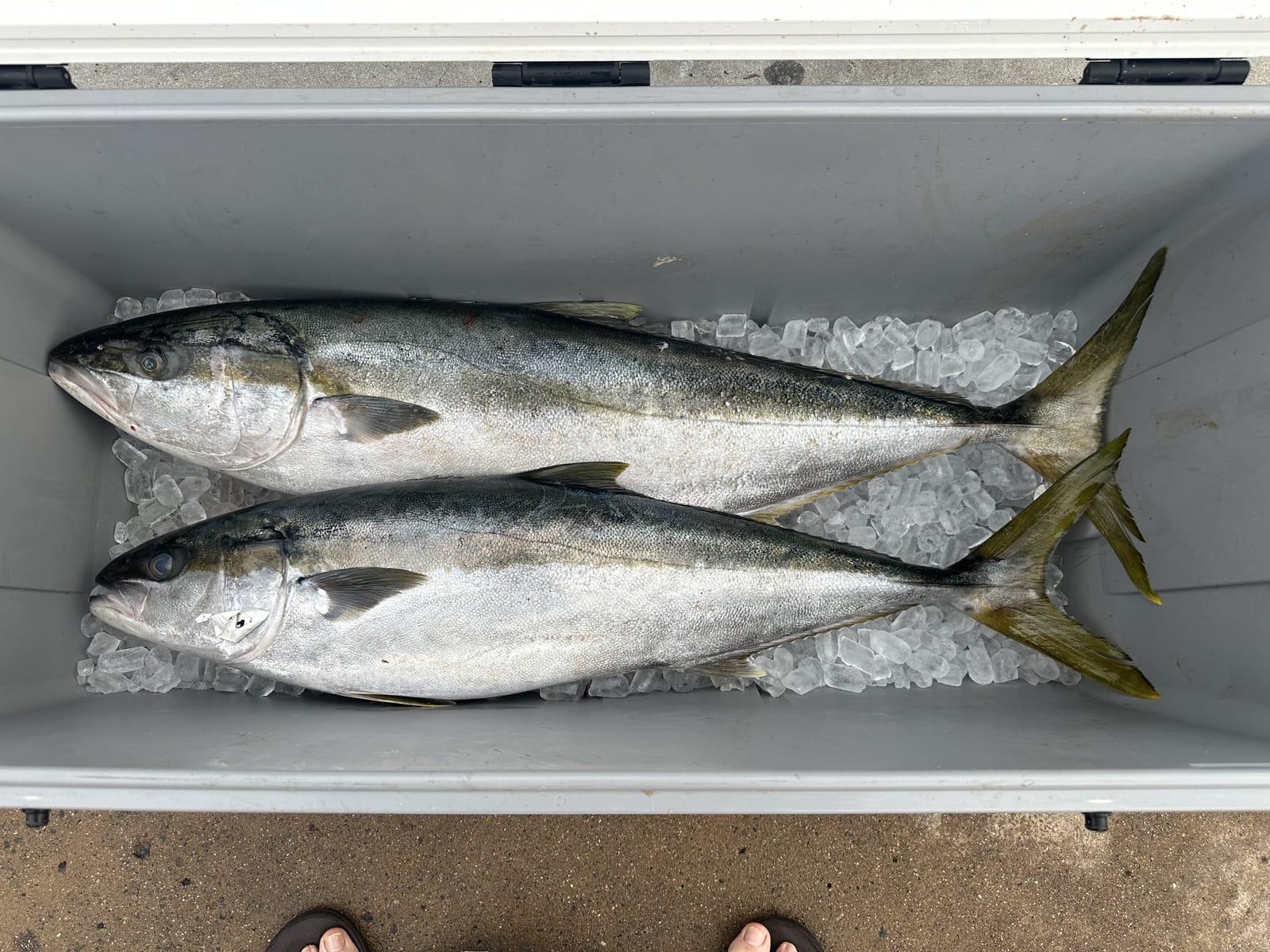
Yellowtail reward the angler who shows up prepared. Learn to read which of the three techniques the day is calling for, bring gear heavy enough to turn a fish out of the structure, and listen to the crew. Do that, and you stop hoping for yellowtail and start targeting them.
They're the fish that built this fishery. Go catch one.
Tight lines — and go find your next catch.